
Cobalt vs Carbide Drill Bits: Which One You Should Use?
In industrial machining, mechanical manufacturing, hardware processing, and metal drilling, it is very important to choose the right drill bit in order to guarantee efficiency and quality. When working with high-hardness metals, stainless steel, ceramics, or abrasive composite materials, the two types of drill bits that are most compared are cobalt drill bits and carbide drill bits.
You might be wondering:
- Cobalt vs Carbide drill bits, which one is better?
- Which materials are each designed for?
- Which drill bit is more durable, efficient, and economical?
Throughout this article, we are going to elaborate on these differences along multiple lines to enable you to make the best choice. Let’s get into it.
Part 1. What Are Cobalt Drill Bits?
Cobalt drill bits are cutting instruments made by adding a certain percentage of cobalt to HSS. The common grades are M35 (5% cobalt) and M42 (8% cobalt).
The presence of cobalt significantly contributes to the enhancement of heat resistance, hardness, and cutting performance, making these drill bits ideal for drilling tough and abrasive metals.
Material Composition (M35 / M42)
M35 (HSS-Co 5%)
M35 cobalt drill bits contain about 5% cobalt. These provide a good balance of hardness and toughness at a reasonable price.
- Ideal for most medium- to high-hardness metals
- Excellent cutting efficiency at a reasonable cost
- Suitable for daily industrial operations where durability and economy are of importance
M42 (HSS-Co 8%)
M42 offers superior hot hardness and red hardness with about 8% cobalt. It does not lose its sharpness and structural stability even at extreme temperatures.
- Suitable for machining harder metals, including some hardened steels
- Wear-resistance and durability that outpace M35.
- For heavy-duty, continuous drilling applications
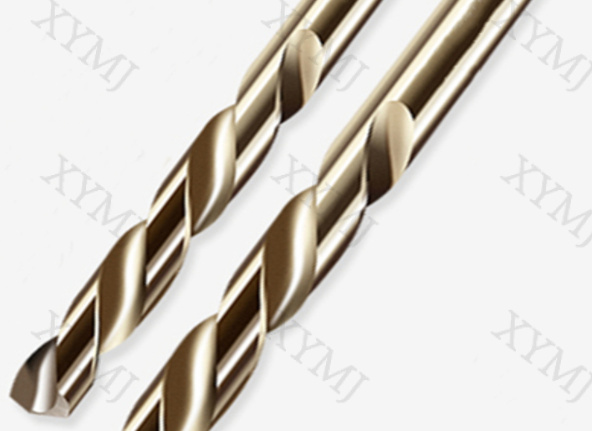
Key Features of Cobalt Drill Bits
1. Outstanding Heat Resistance Without Softening at High Temperatures
The addition of cobalt significantly enhances the capability of the drill bit to resist high temperatures generated during metal drilling, thus preventing annealing and maintaining the cutting performance in long drilling cycles.
2. Quicker, More Efficient Cutting
Increased toughness translates to cobalt drill bits being able to work through tougher metal substrates with a high ability to frictional wear. This results in a much faster drilling cycle, as there will be a much cleaner workpiece hole and a much lower workpiece burning.
3. Excellent Resistance to Fracturing and High Overall Toughness
Cobalt drill bits display a higher toughness than their carbide drill bit counterparts. This results in the ability to withstand sustained flexing, deformation, and interrupted cutting sequences without the drill bit suffering structural failure.
4. Suitable for Heavy-Duty and Continuous Drilling
Combining heat stability with toughness, cobalt bits are better for demanding, repetitive industrial applications.
Applications of the Best Materials
Cobalt drill bits are commonly used to drill a wide range of metals, including but not limited to:
Stainless Steel: Excellent in tough stainless steels such as 304, 316, etc., on account of their strong heat resistance.
Alloy Steel: Handles automotive-grade, tool-grade, and high-tensile steels effectively. Low-, medium-, and high-carbon steels are effectively treated with carbon steel.
Cast Iron: Cuts through brittle cast iron cleanly and reliably.
Partially Hardened Metals (Especially with M42): M42 cobalt bits can drill into some forms of hardened steel where regular HSS bits fail.
Part 2. What Are Carbide Drill Bits?
Carbide drill bits are fabricated from tungsten carbide or other ultra-hard sintered materials. Being among the hardest of all drilling tools available to date in the industrial sector, they attain hardness close to that of diamond.
Carbide bits are mostly used with high-precision machining, CNC operations, and applications involving extremely abrasive materials because of their rigidity and wear resistance.
Material Characteristics
1. Extremely High Hardness, Near-Diamond Level
Tungsten carbide offers fantastic hardness, well beyond that of cobalt and HSS materials. As a result, carbide bits can cut even the toughest or most abrasive surfaces with great ease.
2. Superb Wear Resistance
Carbide keeps the cutting edge much longer than cobalt or HSS; even at very frequent friction and during high-speed drilling, the tool does not wear substantially.
3. Excellent Resistance to High Temperature
For instance, carbide tools are stable under extreme heat conditions generated by ultra-high-speed machining and still remain sharp. This quality makes them ideal for industrial automation.
4. Brittle Compared to Cobalt – Lower Impact Resistance
Though extremely hard, carbide is less tolerant of shock or side pressure. Improper handling or uneven feed will tend to cause chipping or breakage in particular, with handheld drilling.
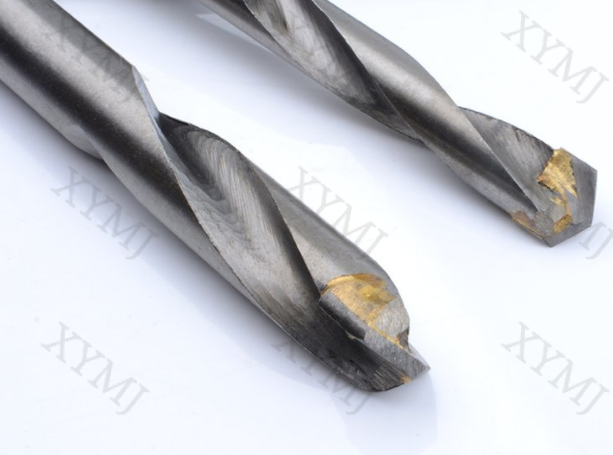
The Key Benefits of Carbide Drill Bits
1. Extremely Long Service Life
Carbide bits can last many times longer than cobalt drill bits, particularly when it comes to abrasive materials like composites or ceramics.
2. Maintains Sharpness at Ultra-High Speeds
Even in challenging CNC applications, carbide remains sharp and provides consistent cutting performance for reduced cycle time and increased productivity.
3. Perfectly Suited for Abrasive and Hard-to-Cut Materials.
Carbide easily handles materials that would quickly wear down cobalt bits, such as fiberglass, tiles, or high-silica composites.
4. The Preferred Choice for CNC and Automated Production
High-volume industrial manufacturing, robotic drilling systems, and automated machining centers have a wide use for carbide bits because of their stability, durability, and precision.
Applications of Best Materials
Ceramics: Ideally suited for drilling hard, brittle surfaces employing proper cooling techniques.
Glass: Clean holes with no cracking, provided adequate lubrication is used.
Porcelain, Granite, Marble Tiles: Able to cut through tough tiles, unlike more traditional styles of bits.
Abrasive Composite Materials: Good for high wearing materials such as fiberglass, carbon fiber, PCB boards, etc.
Cast Iron and Metals of High Hardness: In high-speed drilling operations, especially in higher hardness, abrasive metals.
High Volume Industrial & Automated Manufacturing: Excellent for CNC drilling, robotics, and other mass repetitive production in Automated systems where Consistency and Longevity of the tool are critical.
Part 3. Cobalt Versus Carbide Drill Bits: Detailed Comparison
Choosing between cobalt and carbide drill bits requires a good working knowledge of their differences not only in their makeup but also in performance, durability, and actual application.
Both materials are engineered for hard tasks, each excelling under different conditions, whether metalworking, machining of abrasive composites, or high-precision industrial production.
1. Material Hardness and Strength
Cobalt Drill Bits
Cobalt drill bits are usually M35 with 5% cobalt or M42 with 8% cobalt and have considerably higher hardness compared to standard HSS. The addition of cobalt increases strength and cutting ability while still retaining reasonable ductility.
This combination of hardness and toughness is what enables cobalt bits, particularly, to machine hard steels like stainless steel without chipping or breaking. These can withstand minor vibration, misalignment, or uneven feed, frequently encountered in workshop or hand-held drilling.
Carbide Drill Bits
Tungsten carbide is an ultra-hard material whose hardness approaches that of industrial diamond, and as such, carbide bits are made from this material. Due to this extraordinary hardness, a carbide bit can efficiently cut extremely hard or abrasive materials.
That very rigidity of the carbide means less toughness. It does not bend under tension but will chip or even fracture under unstable drilling setup conditions-or in the presence of lateral force.
Verdict
Carbide leads in absolute hardness; cobalt is far superior in toughness and flexibility.
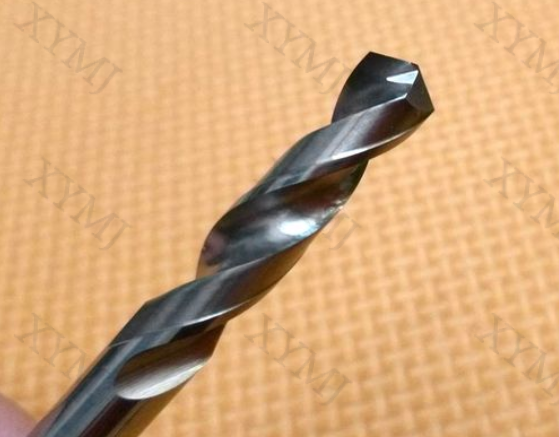
2. Heat Resistance & High-Speed Performance
Cobalt
The cobalt bits show great resistance to heat and maintain their cutting strength even at increased temperatures, hence being very suitable for stainless steel, structural steel, alloy steel, and other materials whose drilling generates considerable heat.
They function well in the medium to high-speed range and resist prolonged drilling without early hardness loss and/or premature dulling.
Carbide
Carbide is in its element in extreme heat conditions. Its thermal stability means it can maintain sharpness during ultra-high-speed drilling, as in CNC machining centers where RPM and cutting temperatures may go substantially higher.
The carbide bits can retain cutting effectiveness with minimal coolant and, thus, are more crucial for high-volume, high-speed production lines.
Verdict
For ultra-high-speed machining, carbide is the ideal choice, while for high-temperature metal drilling in workshops, cobalt is outstanding.
3. Durability & Lifespan
Cobalt
Cobalt bits have a very long and consistent working life in metal drilling. Enhanced hardness combined with ductility enables these bits to undergo many cycles of drilling without failure, making them suitable for fabrication workshops, automotive repair, and industrial maintenance.
Carbide
Among all the materials for drill bits, carbide bits can deliver the longest life, especially with jobs involving abrasive or ultra-hard materials. That is so because carbide bits possess an extremely high resistance to wear, making them ideal for applications in volume production where tool life directly impacts the cost of operation and consistency of production.
Verdict
Carbide offers the longest life, especially in abrasive or high-volume applications.
4. Application Scenarios
Cobalt Drill Bits Are Best For:
- Stainless steel
- Alloy steel & carbon steel
- Cast iron
- Structural metal fabrication
- Heavy-duty workshop drilling
- Field or construction drilling where vibrations may occur
- Applications that demand toughness, flexibility, and reliability
Carbide Drill Bits Are Best For:
- Ceramics, porcelain, glass, and granite tiles
- Abrasive composites include fiberglass, carbon fiber, and PCB materials.
- Hardened cast iron and high-hardness metals
- Automated CNC machining & robotic drilling
- High-speed, high-precision industrial manufacturing
- High-throughput manufacturing where consistency is paramount
Verdict
Cobalt is perfect for drilling metals in practical or field conditions, while carbide has no equal for ultra-hard materials, abrasive surfaces, and precision machining.
5. Cost & Economic Efficiency
Cobalt
Cobalt drill bits are the perfect blend of cost and performance. They are moderately more expensive than a standard HSS, but much cheaper than carbide.
It proves to be very good value for general metalworking shops, repair centers, and manufacturing businesses that engage in regular steel drilling.
Carbide
These are costlier to purchase initially because of the superior material composition and wear resistance. However, this makes them very viable options in industrial environments that entail the drilling of abrasive materials or the production of large batches, since their extended life drastically reduces tool-change downtime and cost per hole.
Verdict
Cobalt is cheaper and suitable for everyday drilling in metal. Carbide provides the best long-term value for either high-volume or high-precision industrial operations.
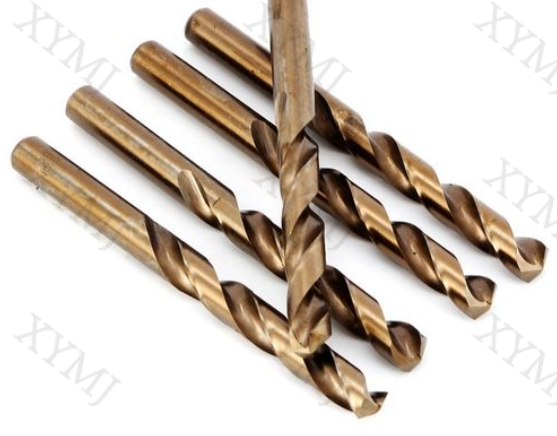
Part 4. Cobalt vs. Carbide Drill Bits: Pros and Cons
Cobalt Drill Bits (HSS-Co)
Advantages
Excellent toughness and fracture resistance
Cobalt bits keep their flexibility under load and vibration and, therefore, are less likely to chip or break off in comparison to carbide.
High Heat Resistance
The addition of cobalt enhances “red hardness” which enables cobalt bits to stay sharp through extended drilling into metals like stainless steel and alloy steel.
Cost-Effective
Equally effective at a lower price than carbide, cobalt remains in high demand for workshops and industrial users.
Versatile Applications
Suitable for amateur DIYers, maintenance applications, and a range of medium-duty industrial machining. They perform well in handheld tools and field operations.
Disadvantages
Lower Performance on Very Hard or Abrasive Materials
While excellent for metals, cobalt is less effective on ceramics, glass, tiles, or abrasive composites.
Shorter Lifespan Than Carbide
Wear is more rapid when drilling very hard or abrasive materials, requiring more tool changes during high-volume production.
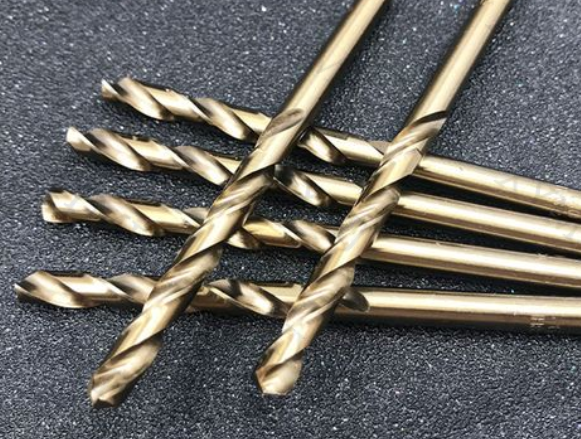
Carbide Drill Bits (Tungsten Carbide)
Advantages
Greatest Hardness and Lifespan
Tungsten carbide achieves almost diamond-level hardness, resulting in much greater longevity and wear resistance of tools than cobalt.
Maintains Sharpness at High Temperatures
Ideal for ultra-high-speed drilling and CNC machining, carbide bits resist softening under heat and deliver consistent hole quality.
Can Cut Extremely Hard and Abrasive Materials
Perfect for ceramics, glass, porcelain tiles, high-silica composites, and hardened metals.
Optimal for High-Volume or Automated Production
The durability and precision of carbide bits make them suitable for CNC machining centers, robotic drilling, and mass production environments.
Disadvantages
Brittle Material
Due to the extreme hardness of carbide, it tends to chip or break if subjected to a side load, impact, or vibration.
Higher Cost
The initial investment is also much higher than for cobalt, though this can be offset by a longer lifespan in industrial applications.
Less Suitable for Handheld or Impact-Prone Drilling
Fieldwork or setups with unstable fixturing require care. Carbide does best in a rigid, controlled environment.
Part 5. Which Should You Choose: Cobalt or Carbide Drill Bits?
Selecting the correct drill is an efficiency issue, a question of precision, and is also a matter of the lifetime of your tool. Which is best is a function of the material to be drilled, the working conditions, and whether you want the drill to be tough, hard, or the lowest cost for an optimum drill.
Here is a practical guide of common positional drilling and more detail about positions of drill bits:
1. Drilling Stainless Steel → Choose Cobalt
Recommended Grade: M35 or M42
Reason: Cobalt drill bits withstand high temperatures and possess great toughness. This makes them great for long drilling tasks through tougher metals including stainless steel. Drilling bits made of cobalt can chip very little from flexing and prolonged drilling because of the cobalt’s combination of hardness and flexibility.
Practical Tip: To reduce friction and generate heat, which helps maintain sharpness and prolongs the service life of the drill bit cutting fluid should be applied. Average feed rates should be used to prevent premature wear of the drill bits.
2. Workpiece: hardened or high-carbon steel. Use M42 Cobalt
Reason: M42 cobalt bits are hardier and have a greater red hardness than M35. This allows them to machine tougher grades of steel without chipping or a significant wear. This makes them suitable to machine high-carbon steel, tool steel, and other difficult metals.
Practical Tip: Keeping a balanced drilling speed and feed rate will be beneficial. Intermittent drilling or pecking will allow heat to be dissipated and help to extend tool life. When holes are deeper, use lubrication.
3. For Drilling Glass, Ceramics, or Tiles, Choose Carbide.
Reason: Tungsten carbide bits are incredibly hard and have a high resistance to wear, which allows them to accessible cut their way through brittle and abrasive materials effortlessly. They create exact smooth holes in glass, porcelain, ceramics, tiles, and other like materials.
Practical Tip: Water or specialized lubrication cools the drill and helps prevent cracking. Don’t use side pressure and don’t twist the bit. Allow the carbide to do the work. Best results come from a slow, steady pressure.
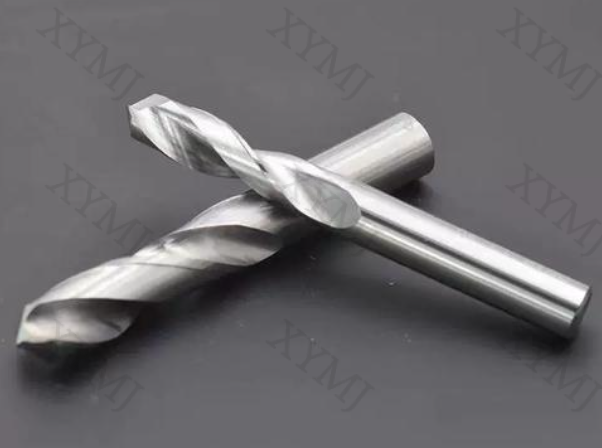
4.CNC Precision Machining/ High-Speed Cutting → Choose Carbide
Reason: Because of ultra-high-speed rotation, carbide drills stay sharp and dimensionally accurate. Due to this feature, they are perfect for automated drilling, CNC operations, and other processes that are highly industrialized. Additionally, because of carbide’s rigidness, the same quality of holes will be produced throughout the entirety of a large production run.
Practical Tip: Using proper clamping and rigid fixtures avoids vibration. Follow recommended RPM and feed settings for the specific material. The parameters should be well-controlled, as the carbide is brittle and subject to fracture resulting from sudden lateral forces.
5. DIY, Maintenance, Electrical, or Hardware Store Applications → Choose Cobalt
Reason: Because of this, cobalt bits strike a balance between toughness, heat resistance, and affordability, making them ideal for use on handheld drills and everyday use. They handle most general tasks in metalwork adequately without the risk of chipping or breaking immediately.
Practical Tip: Great for field work, maintenance, and general repair applications where precision or ultra-hard material cutting is not an issue. Cobalt bits also excel on softer metals and are much more forgiving than carbide in hand operations.
Quick Selection Summary
| Material / Scenario | Recommended Drill Bit |
| Stainless Steel | Cobalt (M35 / M42) |
| Hardened / High-Carbon Steel | M42 Cobalt |
| Glass, Ceramics, Tiles | Carbide |
| CNC / High-Speed / Industrial Automation | Carbide |
| DIY, Handheld, Maintenance, Workshop | Cobalt |
Rule of Thumb:
- Metals → Cobalt for toughness and heat resistance
- Ceramics & Glass → Carbide for hardness and precision
- High-volume CNC / automated production → Carbide for long tool life
- Daily use & cost-conscious tasks → Cobalt
Part 6. How to Extend the Lifespan of Your Drill Bits?
Regardless of using Cobalt or Carbide drill bits, their service life and drilling quality can be greatly improved by following appropriate operating procedures. To this end, several useful tips can be offered.
Use Appropriate Drilling Velocity
RPM rate should be adjusted based on the material. More fragile materials can be drilled more quickly, while harder materials require more slowly drillings. Overheating and excessive wear can be avoided by appropriate drill speeds.
Use Cutting Fluid on Metal Drilling
Using cutting oil, or lubricant, prevents friction and excessive heat build-up which preserves the sharpness of cutting edges and prevents dulling.
Avoid Excessive Pressure
Apply gradual and steady pressure without forcing the bit. Carbide bits tend to break from pressure fatigue.
Keep the Drill Bit Cool
Tool wear happens most from heat build-up. To keep the heat down, periodically retract the bit, and with prolonged drilling sessions, use air/water cooling.
Regular Sharpening and Maintenance
To keep a bit’s cutting edge, periodically inspect and grind the drill bit. With a sharp bit, the heat generation from the bit will remain low, and the hole quality will be better, and the lifespan from the bit will be extended.
Summary:
By combining proper speed, working pressure, sufficient lubrication, cooling, and regular sharpening, both Cobalt and Carbide drill bits can be let’s say effective and continuously produce better life, better performance and the same high quality.
Part 7. Why Choose Carbure Tungsten as Your Drill Bit and Cutting Tool Supplier?
Through precision machining and tool production, Carbure Tungsten has gained several years of experience and recognition as a professional tungsten carbide drill bit manufacturer that has:
- Extensive Variety of Products: Produce a complete line of cobalt drill bits, carbide drill bits, as well as other specialized cutting tools.
- Strict Material and Hardness Control: Consistent tool performance due to strict control of material and hardness.
- Advanced CNC Technology: High precision cutting edges and excellent geometry of tools.
- OEM/ODM: Provides solution for bulk production to industrial corporations or wholesale clients.
- Fast Delivery, Competitive Pricing, and Consistent Quality: Trusted provider for both large and small orders.
Carbure Tungsten drills as well as other cutting tools are reliable and of superior efficiency for your requirements whether it is for hardware tools, machinery manufacturing, metalworking, or industrial engineering.
Conclusion
In the comparison of Cobalt vs. Carbide Drill Bits, there is no absolute winner, only the best choice for your specific material and application.
- For metalworking → Cobalt is the ideal choice
- For ceramics or glass → Only Carbide can handle the job
- For high-volume, high-speed production → Carbide offers superior efficiency
- For a balance of cost and practicality → Cobalt provides excellent value
If you need high-quality cobalt drill bits, carbide drill bits, or customized solutions, Carbure Tungsten is ready to provide professional support and industrial-grade solutions tailored to your needs.
Related Products


