
Vacuum Sintering vs. HIP Sintering: What’s the Difference for Precision Tungsten Carbide Parts?
When it comes to manufacturing precision tungsten carbide parts, the sintering method you choose is not just a technical detail—it directly affects performance, reliability, and cost. Two processes are often discussed together: vacuum sintering and HIP sintering. They sound similar, but they are not interchangeable.
So what is the real difference? More importantly, how does that difference show up in the parts you actually use?
1. The Sintering Environment
The initial and core distinction between two things exists because they operate in two different environmental conditions.
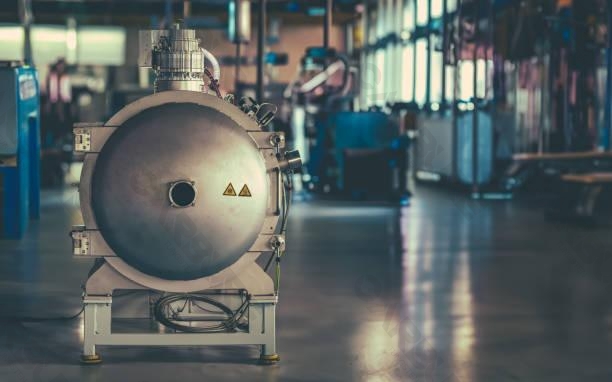
A vacuum sintering furnace operates through its process of heating parts within an oxygen-free environment that maintains low pressure. The tungsten carbide material receives protection from oxidation through this environment which enables the formation of clean bonds between particles. The process aims to create a part through shaping and densification that maintains both high purity and precise dimensional control.
The process of Hot Isostatic Pressing (HIP) uses both hot temperatures and extremely high gas pressures for its sintering process. The system applies complete compression through its design because HIP removes air by pressing the part from multiple directions.
That means Vacuum sintering focuses on forming the part and defining its structure. But, HIP focuses on forcing out the last internal defects left behind.
2. Timing in the Manufacturing Process
Vacuum sintering is the primary sintering step. It is the stage where the powder compact becomes a solid, usable tungsten carbide part. Shape, size, and basic microstructure are all established here.
HIP sintering, on the other hand, is usually a secondary process. It does not create the part from powder. Instead, it is applied after vacuum sintering to improve internal quality.
A simple way to think about it is this: Vacuum sintering makes the part. HIP improves what vacuum sintering cannot fully eliminate.
3. Density and Internal Porosity Control
Tungsten carbide parts must be dense to perform well. Any internal porosity can reduce strength and shorten service life.
With vacuum sintering, most pores are closed during densification, but some microscopic, sealed pores can remain.
With HIP sintering, high gas pressure collapses those remaining pores, pushing the part closer to its theoretical maximum density.
HIP-treated parts generally show:
- Higher bending strength
- Better fatigue resistance
- More consistent performance in demanding applications
If internal defects are unacceptable for your use case, this difference becomes critical.
4. Dimensional Precision vs. Internal Perfection
Precision can mean different things. Vacuum sintering is excellent for shape precision and dimensional control. It is widely used when parts have complex geometries or tight tolerances.
HIP sintering is not about reshaping the part. In fact, because pressure is applied uniformly, there can be very small dimensional changes. HIP focuses on internal perfection, not external geometry.
So the difference is clear: If your priority is precise shape and stable dimensions, vacuum sintering is essential. If your priority is internal quality and defect elimination, HIP adds value.
5. Mechanical Performance vs. Cost
Every manufacturing decision is a balance between performance and budget.
Advantages of vacuum sintering include:
- Lower overall processing cost
- Shorter production cycles
- High efficiency for batch manufacturing
- Good performance for most industrial applications
HIP sintering, however, adds:
- Extra processing time
- Higher equipment and operating costs
- Higher final part cost
What you gain is superior mechanical reliability. The question is not whether HIP is better—it is whether your application truly needs that extra level of performance.
6. Typical Applications in Precision Tungsten Carbide
The difference becomes clearest when you look at real use cases.
Vacuum sintering alone is often enough for:
- General wear parts
- Standard cutting tools
- Mold components with moderate load conditions
Vacuum sintering + HIP is preferred for:
- High-stress tooling
- Aerospace and medical components
- Parts where failure is not an option
Choosing the wrong process can mean either overpaying—or underperforming.
So, the real difference between vacuum sintering and HIP sintering is not just technical—it is functional. Vacuum sintering defines the part. HIP sintering perfects it internally.
They serve different roles in the lifecycle of a tungsten carbide component. One creates the structure, the other strengthens what already exists.
If your application demands reliability, strength, and long-term stability under extreme conditions, understanding the difference between sintering vs. hipping is not optional—it is essential.The better you understand that difference, the better your tungsten carbide parts will perform where it matters most.
Related Products


