
How is Tungsten Carbide Made? A Complete Process Overview
Tungsten carbide, known for its extremely high hardness, outstanding wear resistance, and excellent high-temperature stability, is widely used in high-intensity industrial applications such as cutting tools, wear-resistant parts, mining equipment, oil and gas, and tobacco machinery.
So, how is tungsten carbide made?
As a professional tungsten carbide manufacturer, we will systematically explain the complete manufacturing process of tungsten carbide, from raw materials to sintering and final forming, providing a clear insight into how is tungsten carbide made and helping you understand the process logic behind its exceptional performance.
Main Raw Materials of Tungsten Carbide Manufacturing
Performances for tungsten carbide are fundamentally defined by the quality and consistency of its raw materials. From hardness, wear resistance to microstructural stability, every critical property is set at the stage of material selection itself. Below are listed the core materials used in the manufacture of tungsten carbide:
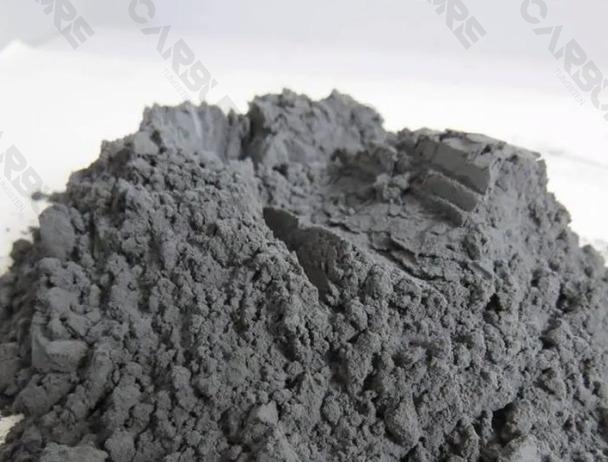
Tungsten Ore and Tungsten Powder
The production of tungsten carbide begins with so-called natural ores-wolframite and scheelite. These ores are subject to several steps of beneficiation and chemical processing for the extraction of tungsten and transformation into APT, or ammonium paratungstate, one of the critical intermediates in the tungsten industry. The APT quality will directly define the possible quality of the final product.
APT is then reduced under high-temperature hydrogen atmospheres to form high-purity tungsten powder. Physical properties of interest at this stage include stringent chemical purity, particle size distribution, and particle morphology since these parameters have a strong impact on carburization uniformity and will ultimately dictate hardness, strength, wear resistance, and microstructural stability of the finished tungsten carbide.
Carbon Source Materials
Carbon is an important element in the formation of tungsten carbide (WC) as it directly reacts with tungsten during carburization. Carbon sources can be:
- Carbon black
- Graphite Powder
Carbon source selection and use levels are important for reaction efficiency and powder uniformity.
It is important to control carbon precisely because under-carbonized conditions can cause the presence of free tungsten or undesirable η phases, and over-carbonized conditions can cause free carbon in the material, which can be detrimental to their uniformity, strength, and life of service.
This is the main reason why industry is heavily reliant on precise formulations and quality checks of these samples for optimal carbon contents.
How is Tungsten Carbide Made?
In this section, we provide a step-by-step breakdown of the tungsten carbide manufacturing process, explaining how high-purity tungsten powder is transformed into dense, durable, and highly reliable tungsten carbide components.
Step 1: Tungsten Powder Preparation
The process begins with high-purity tungsten powder, produced by reducing tungsten compounds (such as ammonium paratungstate, APT) under a high-temperature hydrogen atmosphere. Key considerations at this stage include:
- Particle size control: Fine or ultrafine particles improve reaction uniformity and WC powder quality
- Powder purity: Low impurity content is crucial for consistent hardness and wear resistance
- Oxygen content control: Excess oxygen can lead to undesired phases that reduce mechanical properties
This step lays the foundation for high-quality tungsten carbide powder production.
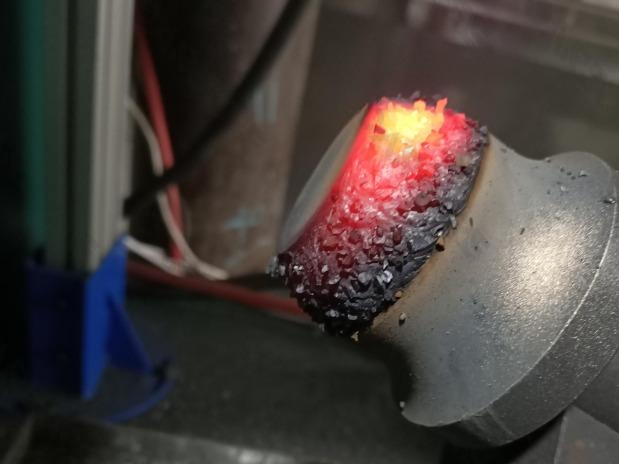
Step 2: Carburization (Formation of Tungsten Carbide Powder)
Tungsten powder is then reacted with a carbon source (carbon black or graphite) at high temperatures of 1400–1600°C, forming tungsten carbide (WC) powder.
Critical factors include:
- Precise temperature control to ensure complete carburization without excessive grain growth
- Accurate carbon content to prevent free tungsten or free carbon formation
- Uniform mixing and particle morphology for consistent WC phase stability
This step determines the stability and uniformity of the WC phase, which directly affects the performance of the final product.
Step 3: Addition of Binder Metal and Powder Mixing
To improve toughness and impact resistance, a metallic binder such as cobalt (Co) or nickel (Ni) is added. Binder content varies depending on application:
- Cutting tools: high hardness, low binder content
- Wear-resistant parts: balanced hardness and toughness
- Impact applications: higher binder content
The powder is thoroughly mixed, often via ball milling, to ensure even distribution of the binder and uniform particle morphology, which is critical for the mechanical consistency of the final tungsten carbide components.
Step 4: Powder Compaction and Shaping
The mixed powders are formed into the desired shape using methods such as:
- Uniaxial pressing: For standard shapes
- Cold isostatic pressing (CIP): For higher green density and uniformity
- Custom mold forming: For complex or non-standard parts
This stage determines dimensions, structural integrity, and density, and is crucial for customized or non-standard products.
Step 5: Sintering
The pressed parts are sintered in a vacuum or protective gas atmosphere at high temperatures. During sintering, WC grains and the metallic binder bond to form a dense, hard composite structure.
Sintering quality impacts:
- Density: Affects hardness and wear resistance
- Flexural strength: Ability to withstand bending and impact
- Service life: Fewer internal defects lead to longer durability
This is one of the most technically challenging steps in tungsten carbide manufacturing, requiring precise temperature and atmosphere control to achieve optimal performance.
Post-Processing and Precision Machining of Tungsten Carbide
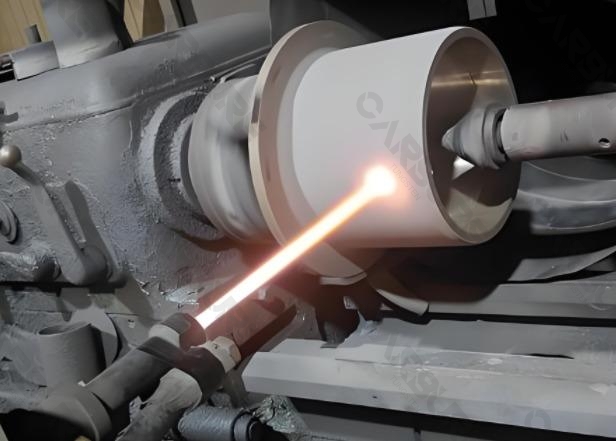
The sintering process does not represent the end of manufacturing. To serve as functional tungsten carbide components, sintered components might go through additional processing, such as machining, which might entail:
Precision grinding: Achieving exact dimensions and tight tolerances, critical for cutting tools, dies, and wear-resistant components.
CNC machining: For complex geometries, slots, holes, or custom shapes that cannot be achieved through pressing and sintering alone.
Surface treatments: Such as polishing, coating, or plating to enhance wear resistance, reduce friction, or improve corrosion resistance.
Tungsten carbide has a remarkable hardness level. This makes metalworking processes such as machining and finishing even harder to perform in comparison with other metals. Such difficulty in metalworking has made it expensive to create tungsten carbide materials by adding value to them.
Why the Manufacturing Process Determines Tungsten Carbide Performance
The final performance of the tungsten carbide is, however, not only dependent on the materials used, but it is necessary to say that the accuracy of the total process of manufacturing it is also an important consideration. Every step from powder production to the sintering process affects the life of the product.
Some common issues illustrate this clearly:
Inconsistent Powder Particle Sizes: The use of WC or tungsten powder with inconsistent particle sizes may result in weaknesses within the compact, which in turn may lead to fractures or earlier failure upon being loaded.
Incomplete Carburization: Lack of reaction of tungsten and carbon, leading to unreacted tungsten or unstable compounds, thereby decreasing the hardness and wear resistance of alloys.
Incorrect Sintering Control: Incorrect temperature or atmosphere control procedures of sintering can lead to internal porosity, density differences, or microscopic defects in the part’s structure, contributing to reduced part life.
Thus, a completely controllable end-to-end process is a prerequisite for producing high-quality tungsten carbide. Beginning with raw material selection, processing of powdered material, and carbonization, and ending with compaction, sintering, and machining processes, process control is by far the critical parameter that defines the final hardness, strength, durability, and longevity of tungsten carbide components.
How to Choose a Reliable Tungsten Carbide Manufacturer?
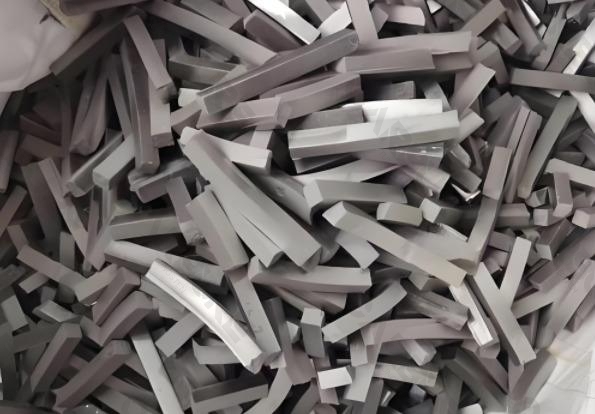
When sourcing tungsten carbide, selecting a reliable and experienced manufacturer is crucial. The right supplier not only provides high-quality products but can also help optimize overall production efficiency and cost. Key factors to consider include:
Powder quality control abilities
Any reputable supplier should be able to maintain strong controls in the particle size, purity level, and shape of the tungsten powder and the WC powder in order to directly affect the hardness properties.
Stable sintering and formulation systems
High-performance tungsten carbide requires precise sintering conditions and well-optimized binder formulations. Suppliers with proven, repeatable sintering processes can ensure uniform density, minimal defects, and predictable mechanical properties.
Facilitating custom grades and non-standard part requirements
Depending upon the requirement, cutting tools or high-impact parts, your manufacturer should be able to fulfill your requirement for custom grades, binder content, and sizes.
Thorough quality inspection processes
The genuine supplier should have Inline as well as Final inspection processes including Density evaluation, Hardness test, Microstructure examination, and Dimension verification to ensure the quality of the parts.
It is important to select a supplier that is experienced in tungsten carbide procurement so that you are not only getting materials, but you are getting a supplier that can alleviate risk, improve component performance, and decrease total cost of ownership.
In Summary
From the above process overview, it is evident that tungsten carbide is not merely a basic materials product but an engineered materials product whose functionality depends on the manufacturing process to a great extent. It is essential to comprehend the manufacturing process of tungsten carbide to not only appreciate its hardness and wear resistance but to make educated decisions in the world of business as well.
If you are in search of high performance and process-reliable solutions for Tungsten carbide, it becomes very important for you to choose a company that has full manufacturing experience in the industry. For a trusted manufacturer that has experience in tungsten carbide, Carbure Tungsten is your great choice.
Related Products


