

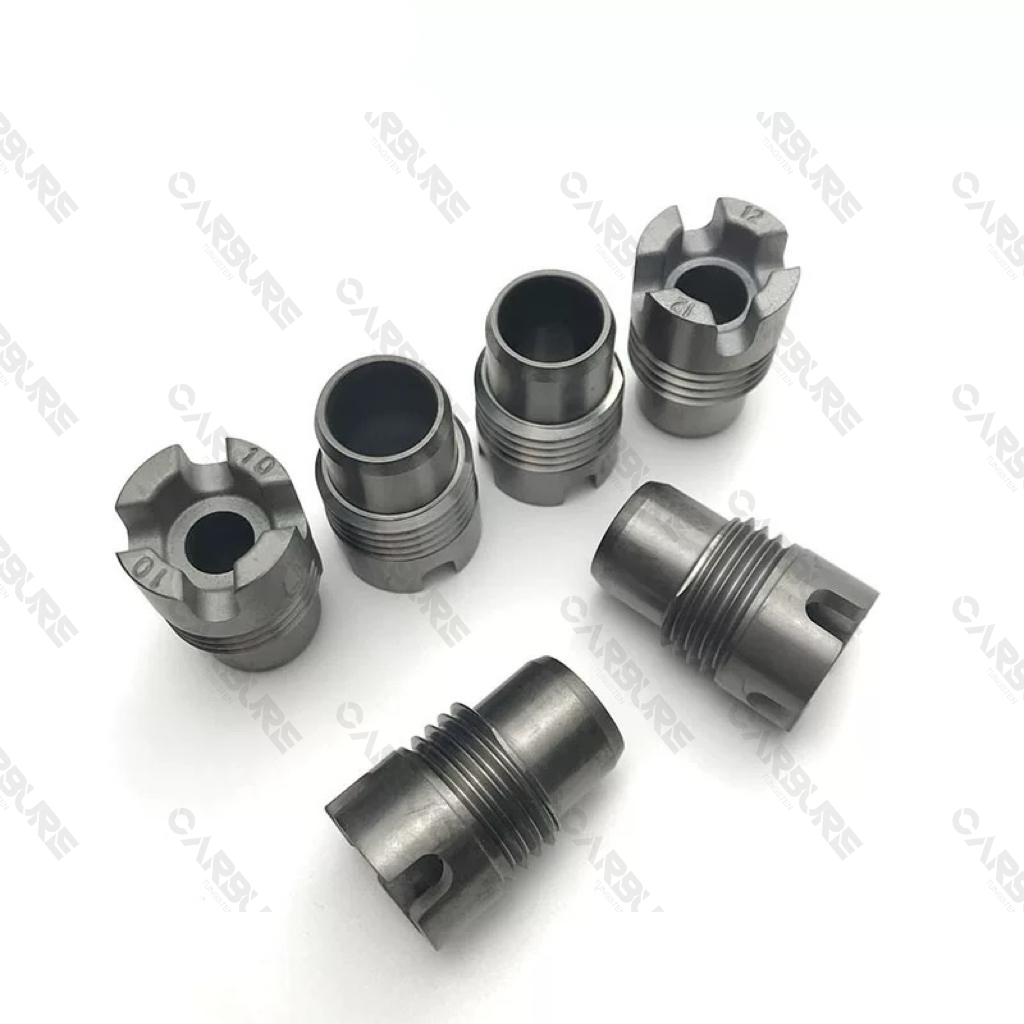


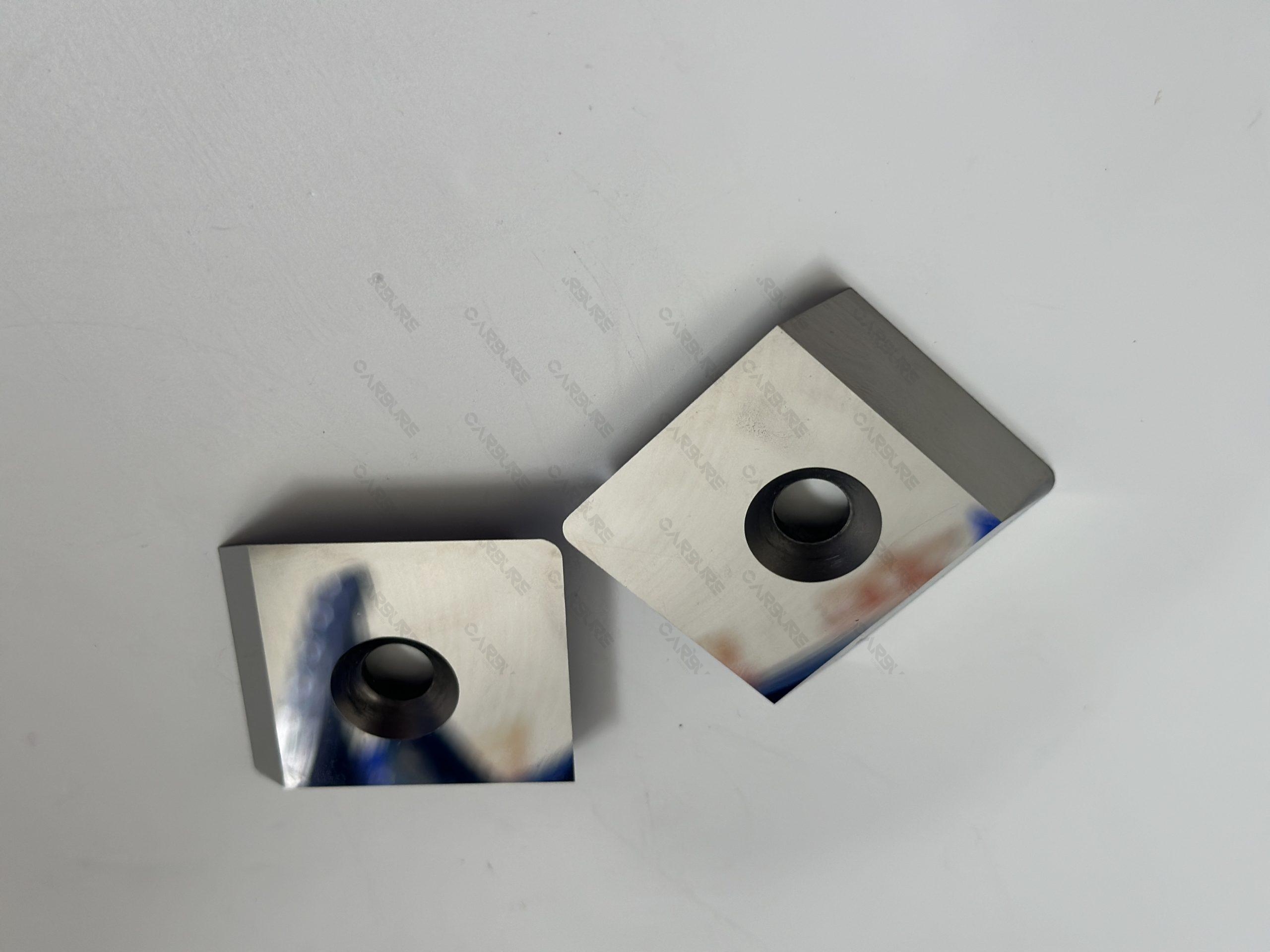
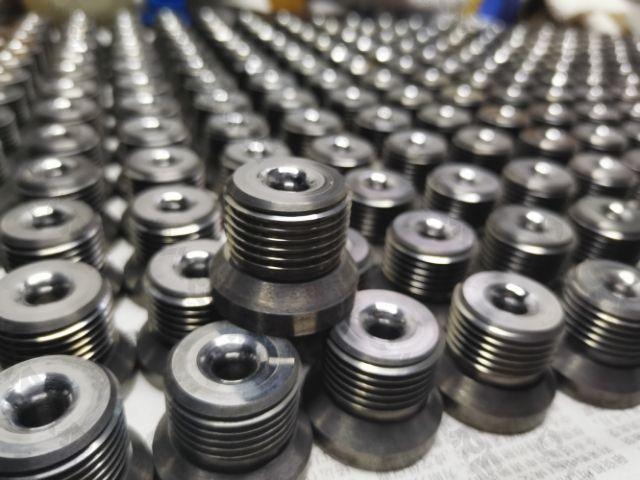

Tungsten Carbide Oil Drill Bits Nozzle
Product Description
The core function of a nozzle is to transform a fluid (liquid or gas) through its internal design into a specific spray pattern, such as an atomized mist, conical spray, or fan pattern, to meet the requirements of diverse application scenarios.
Among various nozzle types, the drill bit nozzle is a critical component installed within the drill head. It serves key functions, including cleaning the wellbore, assisting in rock breaking, cooling the drill bit, and preventing bit balling.
Nozzles manufactured from tungsten carbide (cemented carbide) offer exceptional hardness, superior wear resistance, and excellent corrosion resistance. This material demonstrates outstanding suitability and performs reliably under the harsh, high-wear, and high-pressure downhole conditions typical of petroleum drilling.
Features of Tungsten Carbide Oil Drill Bits Nozzle
Tungsten carbide drill bit nozzles achieve a hardness of approximately HRA 88–93, second only to diamond. In high-flow-rate drilling fluids, their service life is 8–15 times longer than that of conventional steel or ceramic nozzles.
Drilling fluids typically contain Cl⁻, H₂S, CO₂, alkaline additives, and more. Tungsten carbide inherently provides excellent corrosion resistance. This property can be further enhanced by adjusting the binder phase composition, such as utilizing a nickel-based binder.
The internal flow channels are precision-ground and polished to a surface roughness of Ra≤0.4μm. Dimensional tolerances for the flow channels are held within±
0.01 mm, and the jet orifice roundness is maintained at≤0.005 mm. This precision ensures focused drilling fluid jets, preventing energy loss due to spray dispersion. The external dimensions and assembly tolerances conform to industry standards, guaranteeing a gap-free, non-eccentric installation within the drill bit.
Specification of Tungsten Carbide Oil Drill Bits Nozzle
| Material | WC + Co; common grade: YG6. May contain small amounts of additives such as TiC, TaC, and NbC to enhance high-temperature performance and corrosion resistance. |
| Density | 14.3 – 15.05 g/cm³ |
| Hardness | HRA 85 – 93.5 (HV 1400 – 2200) |
| Surface Treatment | Mirror polishing, sandblasting, etc., to improve wear resistance and flow channel smoothness. |
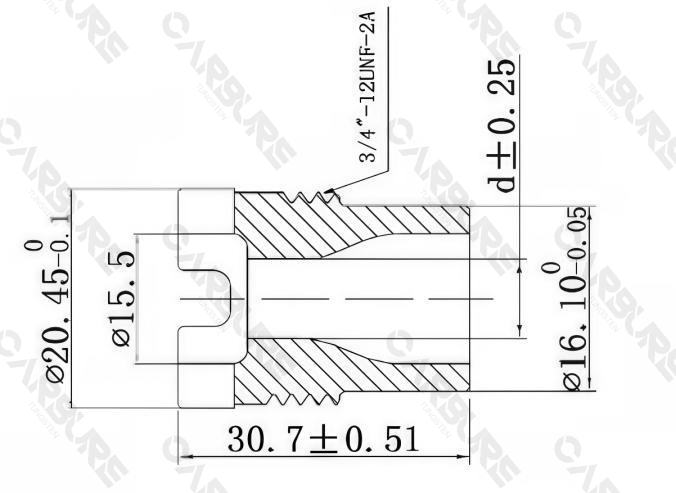
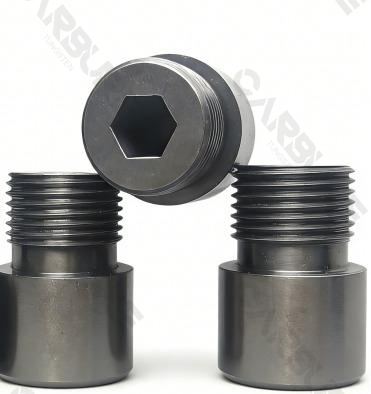
| Thread Specifications (YS/T 1487-2021 Standard) | Thread Type: A, B, C (corresponding to different installation structures) Thread Size: M10, M12, M16, 9/16″, etc. Thread Tolerance: 6H/6g (ensures sealing and connection strength) Thread Length: Adapts to drill bit mounting hole depth, typically 8–15 mm |
Typical Application
Oil & Gas Exploration and Development:
- PDC Bit Application: Primary use for cooling PDC cutters, cleaning borehole cuttings, and assisting in rock breaking. Suitable for high-RPM operations.
- Roller Cone Bit Application: Flushing roller cone bearings, cooling tooth surfaces, and preventing bit balling. Suitable for high weight-on-bit (WOB) operations.
- Core Bit Application: Protects core sample integrity by providing precise cooling and flushing.
- Casing Window Milling Bit Application: Enables efficient cooling and cleaning in confined spaces, ensuring milling accuracy.
Unconventional Oil & Gas Development:
- Shale Gas Horizontal Wells: Cuttings transport over long lateral sections, preventing cuttings bed formation.
- Tight Sandstone Gas Wells: High-pressure jetting assists in breaking up dense formations to improve rate of penetration (ROP).
- Coalbed Methane Wells: Low-damage drilling fluid jetting protects coal seam permeability.
- Geothermal Well Drilling: High-temperature resistant nozzles (HRA ≥ 90) for high-temperature formations (150–250°C).
FAQs


Get Your Customized Solution
Our team and engineers are ready to provide the most cost-efficient solution for you.