

Tungsten Carbide Choke Valve Parts
Product Description
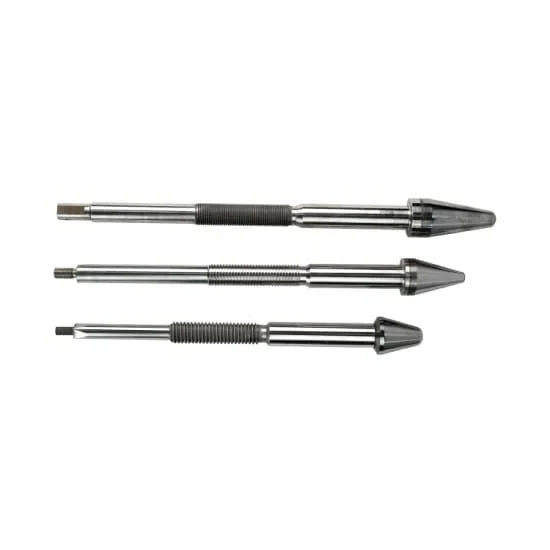
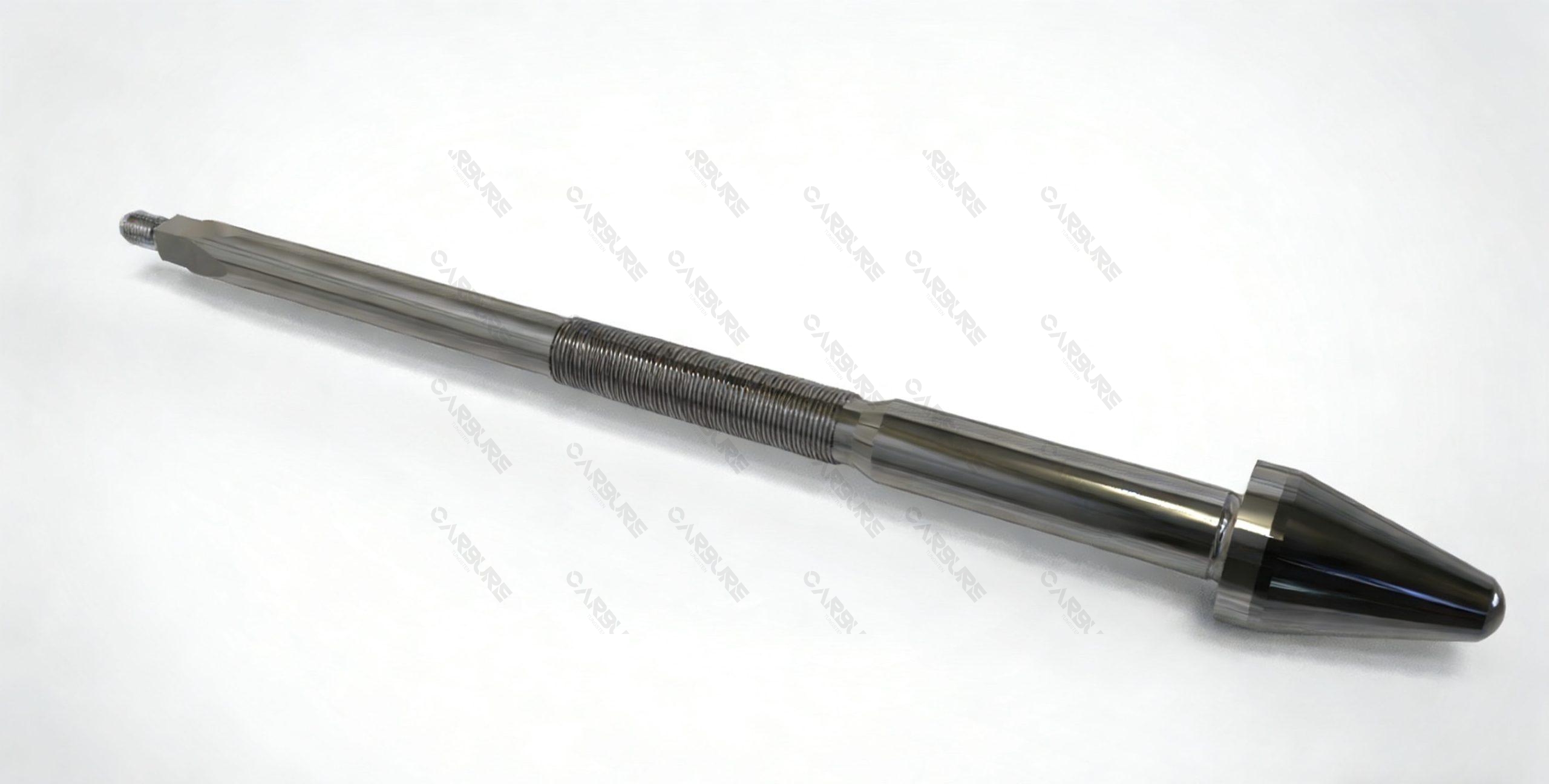
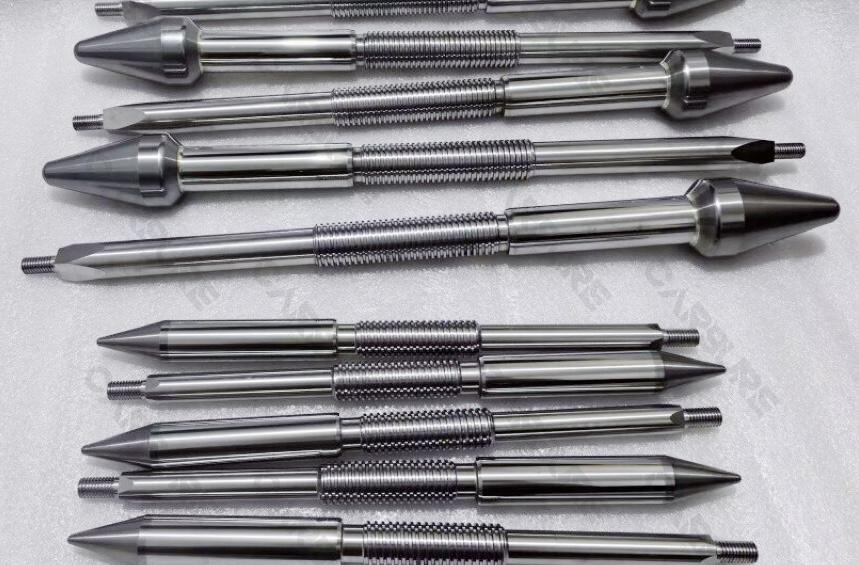
Tungsten carbide choke valve stem is the critical component that connects the handwheel or actuator to the valve plug. Its primary function is to transmit the driving force, moving the plug to adjust the clearance between the plug and the seat. This action controls fluid flow and stabilizes system pressure, effectively serving as the “transmission bridge” of the choke valve.
These stems operate in extremely demanding conditions on drilling platforms and within high-pressure pump systems, facing high pressure, severe erosion, multiple forms of corrosion, and heavy loads. Consequently, tungsten carbide choke valve stems have been developed to meet these challenges. They are engineered to resist erosion from sand-laden fluids and prevent deformation or fracture.
Features of Tungsten Carbide Choke Valve Parts
Manufactured primarily from tungsten carbide (occasionally in a composite structure with a cemented carbide surface layer and an alloy steel core), these stems achieve an optimal balance between high hardness and toughness by adjusting the carbide or binder phase ratio. The cemented carbide surface layer boasts a hardness of HV 1400-2200, far exceeding that of ordinary stainless steel or ceramic stems.
This enables effective resistance to high-speed erosion and mechanical wear from sand-laden fluids (containing quartz sand, gravel), resulting in a service life 3-5 times longer than conventional stems. This significantly reduces replacement frequency, lowering labor and consumable costs.
The material properties allow for precision grinding and polishing of the surface. This ensures concentricity meets drawing specifications, enabling precise fit with the valve plug and bushing to eliminate sticking and leakage.
The cemented carbide material inherently possesses good corrosion resistance. For special service conditions, WC-Ni alloy material can be employed, effectively resisting corrosion from acidic drilling fluids or salt spray. This minimizes the need for frequent maintenance and avoids equipment downtime caused by stem failure.
Specification of Tungsten Carbide Choke Valve Parts
| Material | Tungsten Carbide–Cobalt (WC-Co) based cemented carbide. Corrosion-resistant grades available. |
| Hardness | HRA 87 – 92 (approx. HRC 70 – 80) |
| Density | Approx. 14 – 15 g/cm³ |
| Cobalt Content | 6% – 12% (customizable) |
| Wear Resistance | 50 – 100 times greater than tool steel stems (e.g., AISI 4340) |
| Hot Hardness | Hardness retention > 85% at 500°C |
| Tolerance | Ensured by precision grinding. Strict tolerances are critical for tight seal fit, preventing leakage and jamming. |
| Surface Treatment | Ultra-smooth finish reduces frictional wear, optimizes sealing performance, and enhances fatigue and corrosion resistance. |
| Size | Fully customized according to valve model and design. |
Typical Application
Oil & Gas Drilling and Production Industry
Widely used throughout the entire process of oil and gas drilling, completion, and production. Suitable for flow and pressure regulation in drilling choke manifolds to maintain wellbore pressure stability; controls hydrocarbon output flow. Particularly applicable to production and transport scenarios in sandy, gaseous, waxy, and heavy oil wells. Resists high-speed (erosion) from sand particles in drilling fluid and withstands the high-temperature, high-pressure environments (300-500°C, 30-60 MPa) of deep and ultra-deep wells. Also compatible with corrosive conditions containing H₂S and CO₂, avoiding well control risks and production losses due to stem failure. It is the core preferred component for choke valves in the oil and gas drilling industry.
Offshore Oil Platform Scenarios
Specifically adapted to the harsh offshore environment of high salt spray, humidity, and strong corrosion. Used in fluid control systems on offshore drilling and production platforms, primarily to regulate flow in subsea oil and gas transmission pipelines and stabilize system pressure. Capable of handling continuous vibration from platform equipment operation, ensuring stable stem transmission without loosening, preventing oil and gas leaks caused by stem failure. Compatible with the entire process of offshore high-temperature, high-pressure drilling and hydrocarbon extraction.
Chemical Industry Scenarios
Stems made from WC-Ni alloy material can effectively resist attack from various corrosive media, preventing pitting and rust. This avoids media leakage caused by stem wear and corrosion, ensuring safe and stable production, while meeting the continuous operation demands of the chemical industry.
Power & Energy Industry Scenarios
The stems possess excellent high-temperature resistance and anti-creep properties, allowing for precise regulation of steam flow and pressure to ensure stable operation of power generation equipment. They also resist erosion from high-temperature steam, extending service life and reducing equipment maintenance frequency, meeting the power industry’s demand for high reliability and low failure rates.
FAQs


Get Your Customized Solution
Our team and engineers are ready to provide the most cost-efficient solution for you.